

New Foam Board Insulation Guide Explains Rigid Foam Types, Applications, Limitations and Alternatives
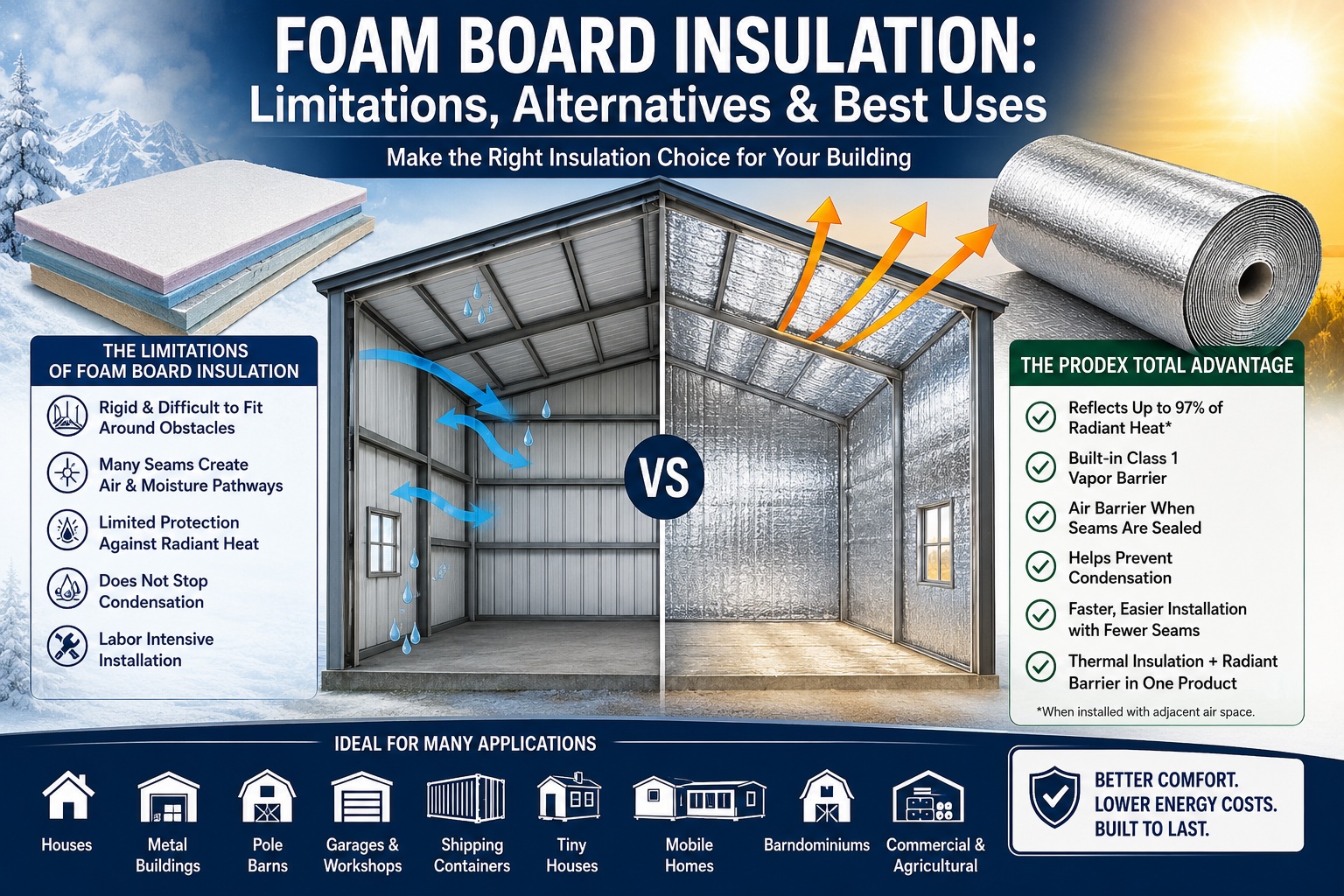
Foam Board Insulation Uses
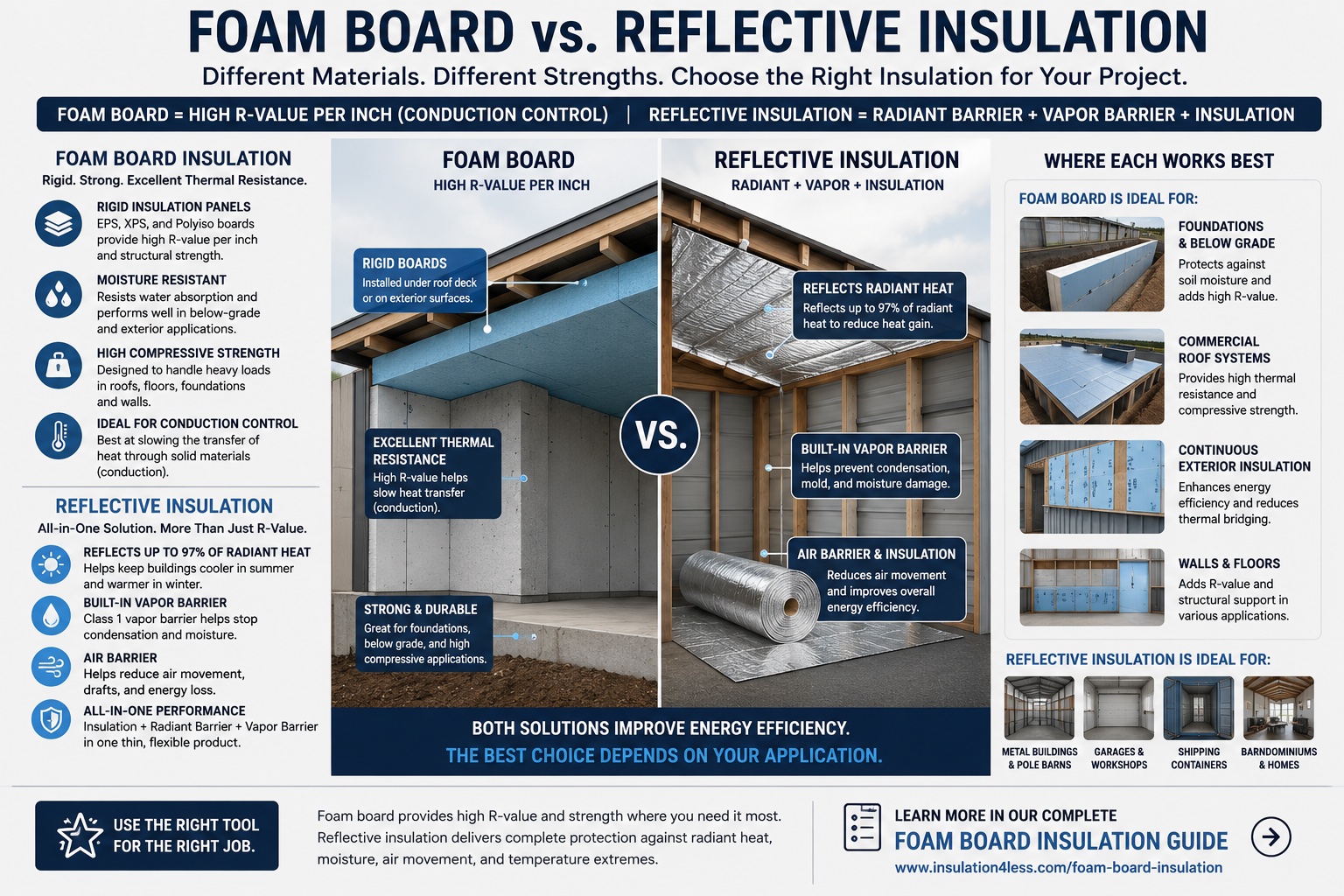
Foam Board Vs. Reflective Insulation

Closed cell foam of Prodex Total Insulation
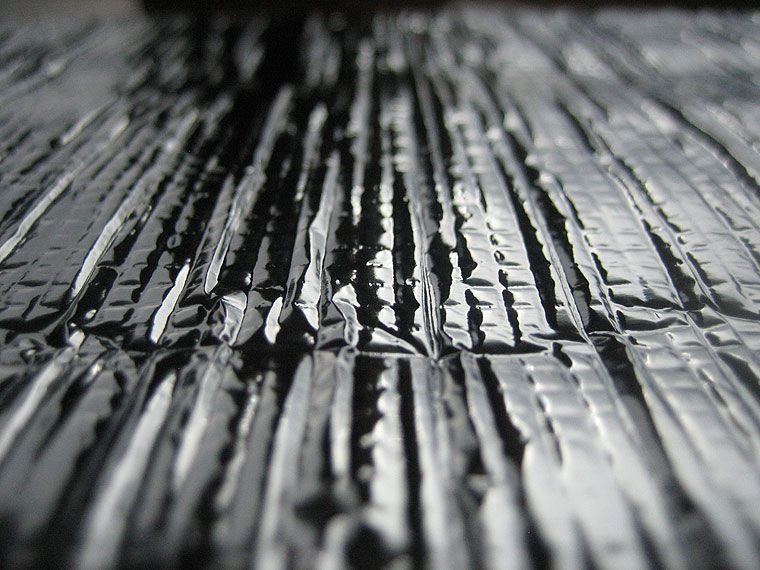
Foil on Prodex Total Insulation
HOUSTON, TX, UNITED STATES, August 29, 2026 /EINPresswire.com/ -- Insulation4Less publishes an educational resource comparing EPS, XPS and polyiso foam board while examining radiant heat, condensation, air sealing and alternative insulation systems.
Foam board insulation is widely used in residential, commercial and industrial construction, but choosing the appropriate rigid insulation requires understanding more than R-value alone.
Insulation4Less has published a new educational Foam Board Insulation Guide designed to help homeowners, contractors and building owners understand the different types of rigid foam insulation, where they are commonly used, their advantages and limitations, and how they compare with other insulation systems.
The guide examines expanded polystyrene (EPS), extruded polystyrene (XPS) and polyisocyanurate (polyiso), the three major categories of foam board insulation.
Each material has characteristics that can make it appropriate for particular applications. EPS is generally an economical and lightweight option. XPS provides higher compressive strength and moisture resistance, while polyiso typically offers the highest R-value per inch of the three under standard testing conditions.
Foam board is commonly used in exterior walls, foundations, basements, crawl spaces, roofs and other building assemblies where reducing conductive heat transfer is an important objective.
### Insulation Performance Involves More Than R-Value
One of the central topics addressed in the new guide is the difference between conductive, radiant and convective heat transfer.
Traditional insulation materials are generally evaluated according to their ability to resist conductive heat flow. However, buildings can also experience significant radiant heat gain, particularly through roofs exposed to direct sunlight.
This can be especially important in metal buildings, pole barns, garages, workshops, agricultural buildings and other structures with large metal roof surfaces.
When sunlight heats metal roofing, the roof can radiate heat toward the interior. Foam board primarily addresses conductive heat transfer, while reflective insulation systems are designed to address radiant heat when installed with the required adjacent air space.
For building owners researching this distinction, the company's Reflective Insulation Guide provides additional information about radiant barriers, reflective insulation and the role of air spaces in reflective performance.
### Installation Quality Can Affect Rigid Foam Performance
The guide also examines installation considerations that can influence the performance of foam board.
Rigid panels must frequently be measured and cut around framing, electrical wiring, plumbing, windows, doors, structural bracing and other building components. Each panel also introduces joints that may require tape, sealant or spray foam to limit unwanted air movement.
As the size and complexity of a building increase, the number of cuts and seams can increase substantially.
This does not make foam board unsuitable. Properly installed rigid foam can provide decades of reliable thermal performance, and the guide identifies several situations where foam board can be an excellent choice, including projects where high R-value per inch, continuous exterior insulation or compressive strength are important priorities.
### Condensation Requires a Whole-Building Approach
Moisture management is another consideration when selecting insulation.
Condensation occurs when moisture-laden air encounters a surface below its dew point. This can become particularly noticeable beneath metal roofs and walls, where temperature changes can create conditions favorable to condensation.
The guide emphasizes that foam board alone does not eliminate condensation. Effective moisture management depends on the complete building assembly, including insulation, air sealing, vapor control, ventilation, indoor humidity and installation quality.
These considerations can be particularly important when selecting insulation for metal buildings where heat transfer through steel and condensation on metal surfaces can present challenges different from those found in conventional wood-framed construction.
Comparing Foam Board With Reflective Insulation
Rather than identifying one insulation material as universally superior, the new guide compares insulation systems according to the problems they are designed to solve.
Foam board can be particularly effective when high conductive R-value per inch is the primary objective. Reflective insulation systems can offer additional advantages where radiant heat, air movement and condensation are significant concerns.
The guide uses Prodex Total as an example of an alternative approach. Prodex Total combines thermal insulation with reflective surfaces, an air barrier and a built-in Class 1 vapor barrier. Its reflective surfaces can reflect up to 97% of radiant heat when installed with the required adjacent air space.
The distinction can become particularly relevant for **[pole barn insulation](https://www.insulation4less.com/pole-barn-insulation-stop-cold-condensation-heat-and-air)**, metal buildings, garages, workshops, shipping containers and similar structures with large exposed metal surfaces.
Selecting Insulation by Application
The guide encourages consumers to evaluate insulation based on the actual building rather than relying on a single performance number.
Important considerations include:
* Building construction and framing
* Local climate
* Roof and wall configuration
* Available insulation thickness
* Conductive heat transfer
* Radiant heat exposure
* Air leakage
* Moisture and condensation potential
* Installation complexity
* Required vapor control
* Project budget
For conventional residential walls or continuous exterior insulation, rigid foam may be an appropriate choice. For buildings where radiant heat and condensation are major concerns, a system incorporating reflective and vapor-control properties may warrant consideration.
“No single insulation product is the best solution for every building,” the guide explains. “The appropriate insulation depends on the structure, climate, moisture conditions, installation method and the types of heat transfer the building is experiencing.”
### An Educational Resource for Insulation Research
The expanded Foam Board Insulation Guide is part of a broader collection of educational resources from Insulation4Less covering residential, agricultural, commercial and metal-building insulation.
The resource also addresses foam board applications in houses, basements, crawl spaces, garages, workshops, metal buildings, pole barns, shipping containers, tiny houses, mobile homes and barndominiums. It includes answers to frequently asked questions concerning R-value, water resistance, vapor control, roof applications and comparisons with fiberglass and reflective insulation.
Consumers planning an insulation project can also use the company's **[How Much Insulation Do I Need?](https://www.insulation4less.com/how-much-insulation-do-i-need)** resource to estimate insulation requirements for roofs, walls, ceilings and different building types.
About Insulation4Less
Insulation4Less provides insulation products and educational resources for residential, commercial, agricultural and industrial construction. The company distributes Prodex Total Insulation in the United States from its Houston, Texas warehouse and publishes building-specific insulation guides covering metal buildings, pole barns, houses, garages, workshops, shipping containers, barndominiums and other structures.
For additional information, visit **[Insulation4Less.com](https://www.insulation4less.com/)**.
Jonathan Barber
Insulation4Less.com Inc
+1 281-356-0798
email us here
Visit us on social media:
Facebook
YouTube
X
Prodex Total Insulation
Legal Disclaimer:
EIN Presswire provides this news content "as is" without warranty of any kind. We do not accept any responsibility or liability for the accuracy, content, images, videos, licenses, completeness, legality, or reliability of the information contained in this article. If you have any complaints or copyright issues related to this article, kindly contact the author above.
