

Funding Secured to Protect 14,177-Acre AP Ranch in Scott River Headwaters
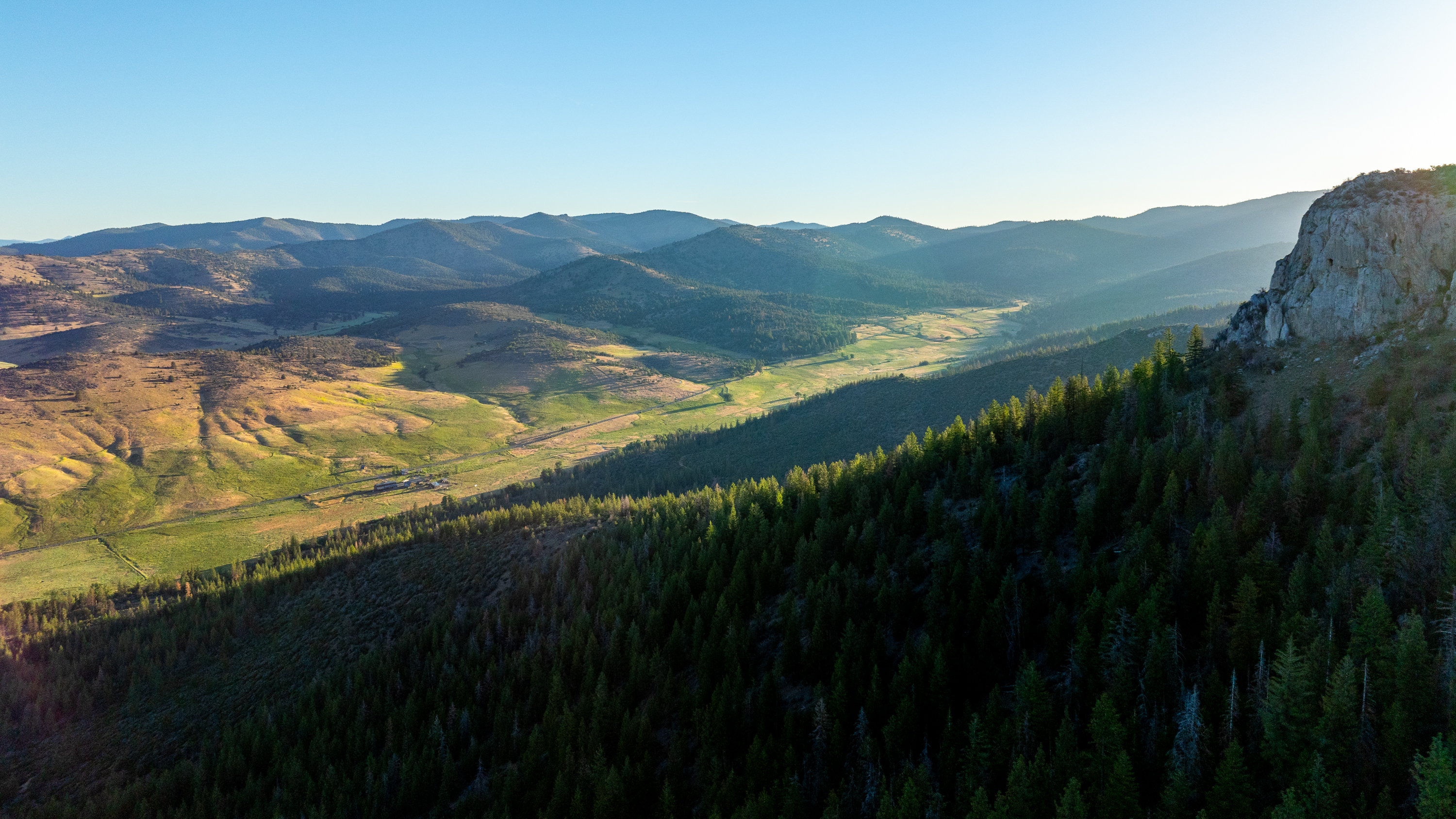
Lovers Leap rock formation overlooks AP Ranch in Siskiyou County. Conservation of the 14,177-acre property builds on prior conservation of 6,094 adjacent acres, now The Wildlands Conservancy's Beaver Valley Headwaters Preserve. Photo by California Outdoor Properties.
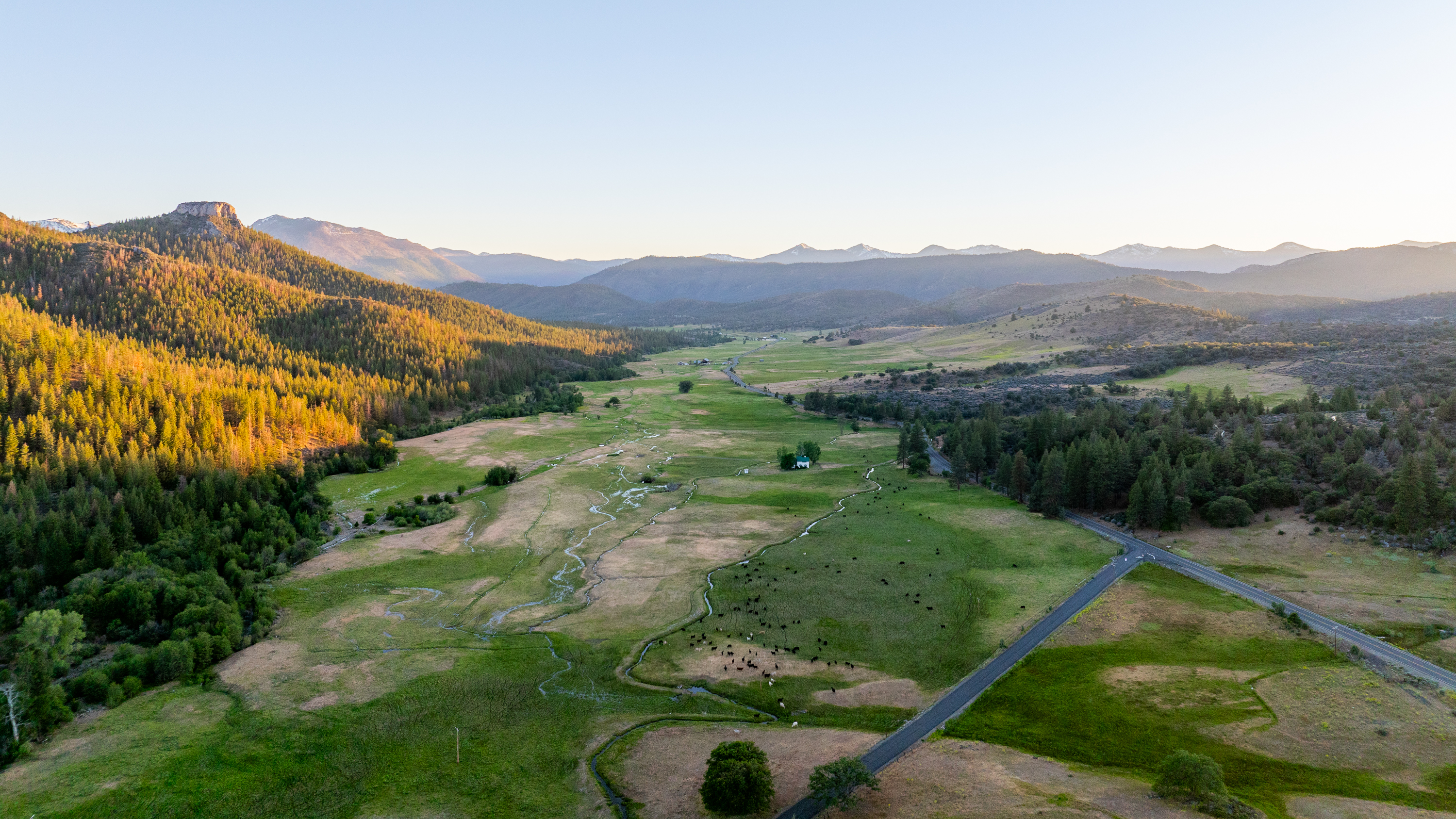
Expansive wet meadows and forest lands surrounding the E. Fork Scott River. Photo by California Outdoor Properties.
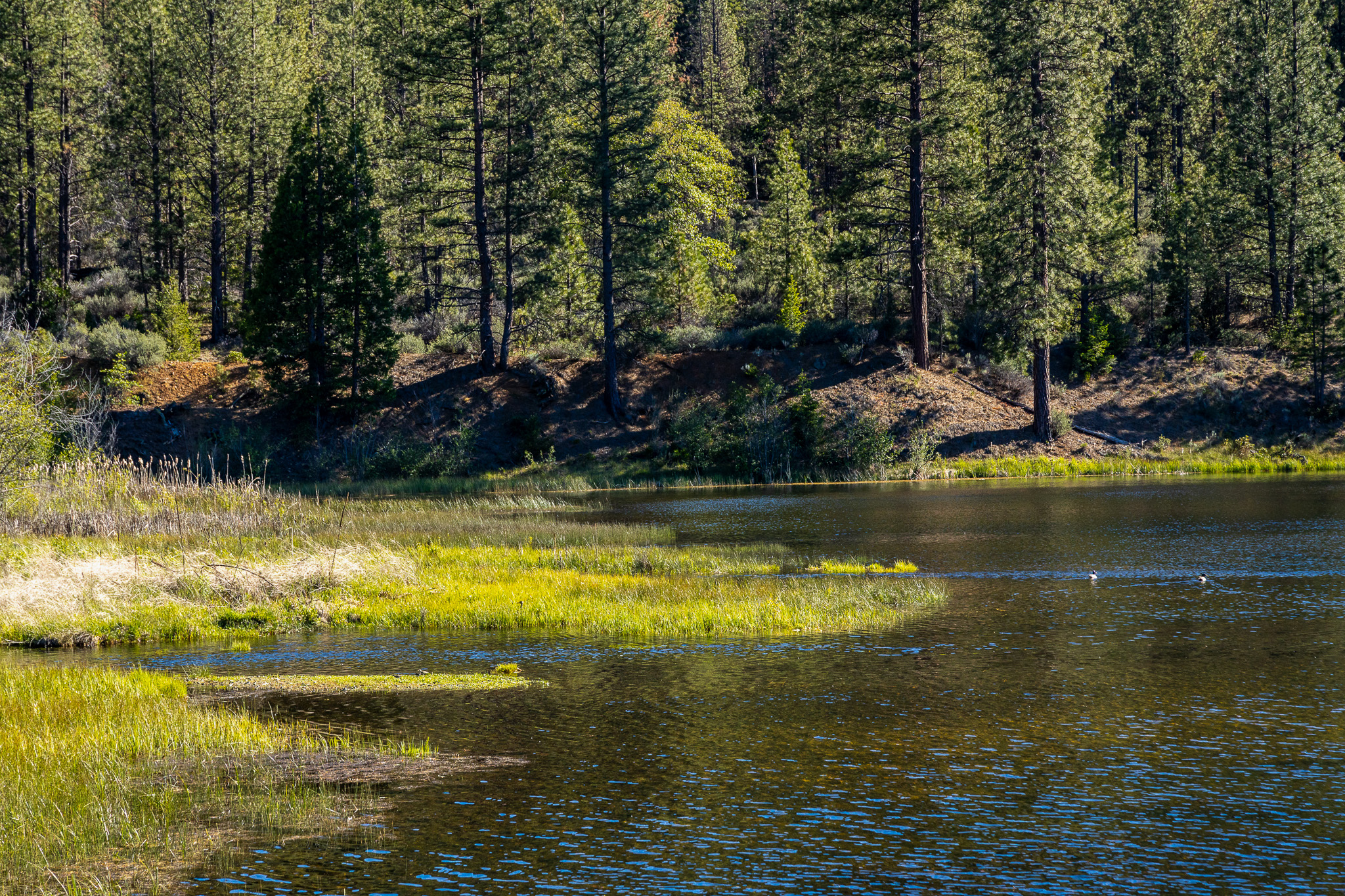
AP Ranch includes abundant water resources important for wildlife. Photo by California Outdoor Properties .
Public-private partnership will expand opportunities for salmon restoration and free public access
AP Ranch encompasses more than eight miles of the East Fork Scott River upstream of the existing preserve. Its addition will expand Beaver Valley Headwaters Preserve to more than 20,000 acres, protecting a connected sweep of river, forests, mountain meadows and wetlands that provide important habitat for coho salmon, Chinook salmon, steelhead and other native wildlife.
“This is a once in a generation opportunity,” said Frazier Haney, executive director for the Wildlands Conservancy. “The AP Ranch purchase allows us, working with partners, to help ensure the Scott River will sustain salmon and wildlife in the region, and provide enjoyment for surrounding communities and families well beyond our lifetimes.”
That opportunity builds on the restoration already underway at Beaver Valley Headwaters Preserve. Wildlands is working with California Trout, the Karuk Tribe, Quartz Valley Indian Reservation, Scott River Watershed Council and other partners to heal the Scott River, including using beaver dam analogs to recharge groundwater and increase stream habitat, improving spawning and rearing habitat for salmon and steelhead.
“The Karuk are salmon people. Our identity and way of life are deeply connected to these fish and the rivers they depend on,” said Russell A. Attebery, chairman of the Karuk Tribe. “We have a responsibility to care for the Scott River and the salmon that have sustained our people since time immemorial. We support the conservation of AP Ranch and look forward to continuing our work with partners to restore the Scott River and its fisheries.”
AP Ranch borders the Klamath National Forest and sits within a much larger network of public, private and conserved lands, creating opportunities for coordinated stewardship and stronger habitat connectivity across the region. The ranch’s position is ecologically important, extending protection into the East Fork watershed, conifer forests, oak woodlands, mountain meadows and wetlands that provide habitat for elk, black bears, mountain lions and a diversity of resident and migratory birds.
“What we do in the headwaters affects the whole river,” said Charnna Gilmore, executive director of the Scott River Watershed Council. “The Scott is all connected, from its forests and streams to its fish and the people who live here. Conservation of the AP Ranch helps us connect more of the restoration work already happening across the watershed.”
The $16.9 million acquisition pairs an $11.5 million investment from the Wildlife Conservation Board (WCB) with private support from the Catena Foundation, the Horizon Foundation, Holdfast Collective, Kisco Conservation Fund, the Center for Biological Diversity and the Rare Wildlife Lands Foundation, and a number of individuals.
Philanthropic partners are also investing beyond the purchase itself, providing resources for early stewardship and preserve startup and helping establish an endowment for the permanent care of the expanded preserve.
These partnerships build on earlier conservation investments in the East Fork Scott River headwaters. In 2021, WCB helped Wildlands acquire the 6,094-acre former Hayden Ranch, establishing Beaver Valley Headwaters Preserve. More recently, the Horizon Foundation made possible two smaller acquisitions that strengthened connectivity between the existing preserve and AP Ranch.
“Protecting a landscape of this scale takes strong collaboration,” said Jennifer Norris, executive director of the Wildlife Conservation Board. “State funding through Proposition 4 allows us to partner directly with The Wildlands Conservancy to restore critical river corridors while ensuring the public can enjoy these lands for generations to come.”
Future free public access and outdoor education will also be part of AP Ranch’s next chapter. Wildlands anticipates beginning with limited guided access while planning over time for broader access that will allow people to experience the East Fork Scott River headwaters while protecting the ecological and cultural values of the land.
“We’re deeply grateful to WCB, our generous supporters, Tribal partners and the many organizations that are making this important conservation acquisition possible,” Haney said. “Permanent ownership allows us to pursue our deepest conservation vision through active stewardship, restoration and rewilding, free public access and outdoor education. And when a preserve can anchor conservation beyond its boundaries, its impact can reach across an entire region.”
###
About The Wildlands Conservancy
Since its founding in 1995, The Wildlands Conservancy has protected more than 2.3 million acres through acquisition and advocacy, safeguarding ecological connectivity and vast natural landscapes across the American West. Across these lands, its growing nature preserve system — now 24 locations spanning more than 210,000 acres — supports hands-on land stewardship, habitat restoration, species rewilding, and meaningful connections between people and nature. With free access for all, these preserves also provide outdoor education programs focused on youth from underserved and economically disadvantaged communities, inspiring the next generation of environmental stewards.
Contact: Sara Seburn, Deputy Director of Marketing & Communications, (909) 712-6231, sara.s@wildlandsconservancy.org
About the Wildlife Conservation Board
Established in 1947, the Wildlife Conservation Board protects, restores and enhances California’s spectacular natural resources for wildlife and the public’s use and enjoyment. WCB works in partnership with Tribes, conservation groups, government agencies and the people of California to safeguard biodiversity and expand access to nature.
Contact: Mark Topping, Information Officer, Wildlife Conservation Board, (916) 539-4673, mark.topping@wildlife.ca.gov
—
Frazier Haney
The Wildlands Conservancy
+1 (909) 797-8507
email us here
Legal Disclaimer:
EIN Presswire provides this news content "as is" without warranty of any kind. We do not accept any responsibility or liability for the accuracy, content, images, videos, licenses, completeness, legality, or reliability of the information contained in this article. If you have any complaints or copyright issues related to this article, kindly contact the author above.
