

Decoding the Light Field: Empowering Next-Generation Photodetectors through Materials and Metasurfaces
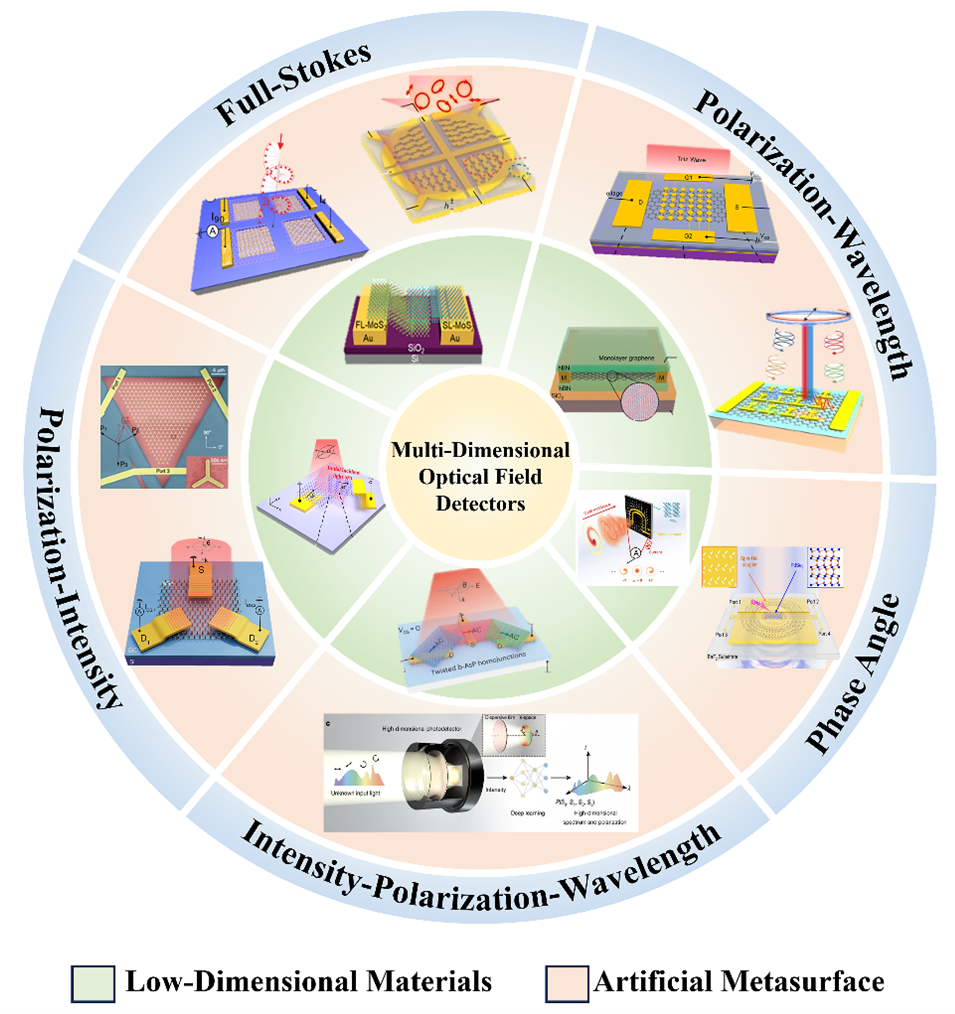
Fig.1 | Multi-dimensional Optical Field Photodetectors
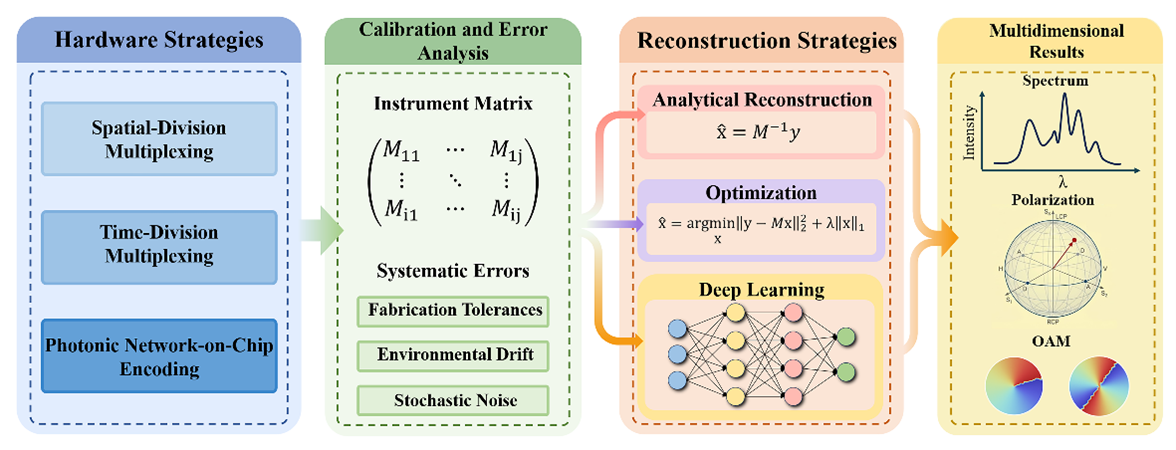
Fig.2 | Signal Readout Architectures and Intelligent Reconstruction Strategies.
New publication in Opto-Electronic Technology DOI 10.29026/oet.2026.260001 discusses empowering next-generation photodetectors through materials & metasurfaces
SHANNON, CLARE, IRELAND, April 6, 2026 /EINPresswire.com/ -- A new publication from Opto-Electronic Technology; DOI 10.29026/oet.2026.260001, discusses empowering next-generation photodetectors through materials and metasurfaces.
Light propagating in free space carries a wealth of physical information across multiple degrees of freedom, including not only intensity but also wavelength, polarization, and orbital angular momentum (OAM). Conventional photodetectors are primarily designed to convert simple optical intensity into electrical signals, fundamentally losing access to this high-dimensional optical information. However, precisely capturing and resolving these multidimensional characteristics is becoming increasingly critical for next-generation information technologies, such as autonomous driving, remote sensing imaging, medical diagnostics, quantum communication, and high-capacity optical networks.
To address this pressing need, the development of integrated multidimensional photodetectors has emerged as a paramount research frontier in modern optoelectronics. This research explicitly defines these advanced devices as chip-scale optoelectronic perception architectures capable of directly resolving high-dimensional optical information. This encompasses both highly compact single-pixel systems and comprehensive, multi-component integrated micro-systems. This evolution from traditional, bulky discrete optical components to miniaturized, integrated hardware overcomes the severe physical bottlenecks of conventional photodetection. By synergistically combining complex light-matter interaction mechanisms with underlying advanced chip manufacturing processes, these architectures lay a solid and indispensable foundation for achieving higher-dimensional, faster, and more intelligent light field perception in modern photonic systems.
This review systematically outlines the transformative research progress and future trajectories in the rapidly evolving field of multidimensional photodetection. The article constructs a highly synergistic "hardware-software" framework spanning from fundamental optoelectronic materials to system-level integration. First, the research team deeply explores how the intrinsic anisotropies and unique electronic band structures of low-dimensional materials—such as transition metal dichalcogenides, black phosphorus, and tellurium—provide the foundational physical mechanisms for extracting specific optical parameters. Through precise energy band alignment, unipolar barrier engineering, and moiré superlattice design, 2D materials can preliminarily achieve the joint detection of polarization and wavelength within a single compact device.
Furthermore, the article forward-lookingly discusses the ultimate developmental paradigm: integrating multidimensional detection mechanisms with the mature, CMOS-compatible silicon photonics platform. By directly embedding inverse-designed micro-nano optical elements, sophisticated multiplexing waveguide networks, and in-sensor computing architectures based on optical neural networks (ONNs) at the sensing front end, future multidimensional photodetectors will successfully eliminate the significant latency of traditional optical-to-electrical conversion and offline digital processing. This profound evolution from discrete sensory devices to system-level intelligent integration demonstrates the tremendous potential of chip-scale multidimensional light field perception in driving the future of artificial intelligence and advanced optical computing
Despite significant progress in multidimensional photodetection, realizing large-scale practical deployment still faces severe challenges. Primary bottlenecks include the wafer-scale synthesis and homogeneity of high-quality optoelectronic materials, the mitigation of Fermi-level pinning at interfaces, and the urgent need for high-bandwidth parallel readout integrated circuits to manage exponential data volumes. Looking ahead, by seamlessly combining active photonics with advanced deep learning algorithms, photodetectors will transform from simple signal converters into highly programmable, intelligent smart nodes, achieving comprehensive, real-time light field perception.
Keywords: multidimensional photodetection, 2D materials, metasurfaces, silicon photonics, light field manipulation, multidimensional light field
# # # # # #
Prof. Anlian Pan’s research group at Hunan University (http://nanophotonics.hnu.edu.cn/), supported by the Hunan Institute of Optoelectronic Integration and the Key Laboratory for MicroNano Physics and Technology of Hunan Province, is dedicated to frontier research in low-dimensional semiconductor photonics and optoelectronic integrated chips. Led by Prof. Anlian Pan—a distinguished scholar and winner of the National Science Fund for Distinguished Young Scholars, the team focuses on strategic directions including novel optoelectronic functional materials, physically orthogonal multidimensional photodetection, Micro/Nano LED intelligent display technologies, and silicon-based optoelectronic integration.
Equipped with comprehensive state-of-the-art micro-nano fabrication and optoelectronic characterization platforms, the team has published over 300 high-impact papers in top-tier international journals such as Science, Nature Materials, Nature Nanotechnology, and Physical Review Letters. Dedicated to cultivating exceptional doctoral and master's talents, the group has also been honored with numerous major scientific innovation awards, including the Second Prize of the National Natural Science Award and the First Prize of the Hunan Provincial Natural Science Award, solidifying their leading role in the field.
# # # # # #
Opto-Electronic Technology (OET) is an international, peer-reviewed and open access English language journal. OET publishes reviews, research articles and letters covering engineering technologies and applications of optics, photonics and optoelectronics.
# # # # # #
More information: https://www.oejournal.org/oet/en/
Editorial Board: https://www.oejournal.org/oet/en/editorial_board/oetEditorialBoard
All issues available in the online archive (https://www.oejournal.org/oet/archive_list_en)
Submission of OET may be made using ScholarOne (https://mc03.manuscriptcentral.com/oet)
ISSN (Print) 2097-6003
CN 51-1811/O4
Contact Us: oet@ioe.ac.cn
Twitter: @OptoElectronAdv (https://twitter.com/OptoElectronAdv?lang=en)
WeChat: OE_Journal
# # # # # #
Liu WQ, Tang ZL, Hua QZ et al. Multi-dimensional photodetection: from material intrinsic properties and metasurface engineering to silicon photonic integration. Opto-Electron Technol 2, 260001 (2026). DOI: 10.29026/oet.2026.260001
Opto-Electronic Technology Editorial Office
Opto-Electronic Technology
123456789
email us here
Legal Disclaimer:
EIN Presswire provides this news content "as is" without warranty of any kind. We do not accept any responsibility or liability for the accuracy, content, images, videos, licenses, completeness, legality, or reliability of the information contained in this article. If you have any complaints or copyright issues related to this article, kindly contact the author above.
