

Rare Earth Elements Market Size to Reach USD 9.89 Billion by 2034 | CAGR 10.20% (2026-2034)
Rare Earth Elements Market Size
The global rare earth elements market size was $4.12 billion in 2025 & is projected to grow from $4.54 billion in 2026 to $9.89 billion by 2034
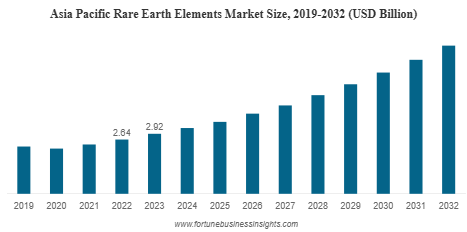
Asia Pacific dominated the rare earth elements market with an 86.70% share in 2025, driven by strong demand from the electronics, automotive, and construction sectors, particularly in China and India.”
NY, UNITED STATES, February 8, 2026 /EINPresswire.com/ -- According to Fortune Business Insights, the global rare earth elements market size was valued at USD 4.12 billion in 2025 and is projected to grow from USD 4.54 billion in 2026 to USD 9.89 billion by 2034, exhibiting a CAGR of 10.20% during the forecast period (2026–2034). Asia Pacific dominated the rare earth elements market with a market share of 86.70% in 2025. This strong growth outlook reflects the increasing reliance on rare earth materials across clean energy, electric vehicles, electronics, and defense applications worldwide.— fortune business insights
Size, Share, and Industry Analysis
The rare earth elements market is witnessing sustained expansion driven by rising industrial demand and strategic government investments. These elements, including neodymium, dysprosium, praseodymium, and terbium, are essential for high-performance magnets, batteries, and advanced electronic components. Market share remains highly concentrated, with China accounting for the majority of global production and processing capacity. However, growing efforts to diversify supply chains are reshaping the competitive landscape, particularly in North America and Europe.
Get a Free Sample of this Report: https://www.fortunebusinessinsights.com/enquiry/request-sample-pdf/rare-earth-elements-market-102943
Key Market Insights
One of the most critical insights shaping the market is the strategic importance of rare earth elements in energy transition technologies. Permanent magnets used in wind turbines and electric vehicle motors rely heavily on rare earth materials. Additionally, geopolitical concerns related to supply security are prompting governments to classify rare earths as critical minerals, leading to increased exploration, recycling initiatives, and long-term procurement agreements.
Global Market Overview
Globally, the market continues to evolve from being mining-centric to value-chain integrated, covering extraction, separation, refining, and application manufacturing. While upstream activities remain concentrated in Asia Pacific, downstream industries such as EV manufacturing, renewable energy infrastructure, and electronics assembly are expanding globally. This shift is increasing cross-border trade volumes and encouraging investments in processing facilities outside traditional production hubs.
Market Trends
A key trend in the rare earth elements market is the growing emphasis on sustainable and environmentally responsible mining practices. Companies are increasingly investing in cleaner extraction technologies and recycling methods to reduce environmental impact. Another notable trend is the rising demand for rare earth-based magnets in electric vehicles, particularly in traction motors, where efficiency and weight reduction are critical. Technological innovation in magnet recycling and substitution research is also gaining traction.
Market Growth Factors
Market growth is primarily driven by the rapid expansion of electric mobility and renewable energy projects. Government incentives for EV adoption, wind power installations, and energy-efficient technologies are significantly increasing rare earth consumption. Additionally, rising defense expenditures and demand for advanced electronics are further accelerating market growth. Strategic stockpiling policies by several countries are also contributing to sustained demand.
Segmentation Analysis
The rare earth elements market is segmented by element type, application, and end-use industry. By element type, light rare earth elements dominate due to their extensive use in catalysts, glass polishing, and magnets. By application, permanent magnets hold the largest share, supported by growing EV and wind turbine installations. End-use industries include automotive, electronics, energy, healthcare, and defense, with automotive and energy sectors showing the fastest growth rates.
Regional Analysis
Asia Pacific remains the dominant region due to its strong mining base, processing capabilities, and established downstream industries. China continues to lead in both production and exports, supported by government-backed resource strategies. North America is emerging as a high-growth region due to increased investments in domestic mining projects and processing infrastructure. Europe is focusing on supply diversification through recycling initiatives and partnerships with resource-rich countries, while other regions are gradually increasing exploration activities.
Key Industry Players
Leading companies in the rare earth elements market are actively expanding capacity and investing in downstream integration. China Northern Rare Earth Group continues to strengthen its global position through large-scale production and technological advancements. Lynas Rare Earths is gaining momentum as a key supplier outside China, particularly for separated rare earth oxides. MP Materials is playing a crucial role in developing domestic rare earth supply chains in the United States. Iluka Resources is also expanding its footprint through investments in rare earth refining and processing projects.
Key Industry Developments
Recent industry developments include significant government funding for rare earth mining and processing projects, especially in the U.S., Australia, and Europe. Strategic partnerships between automakers and rare earth suppliers are becoming more common to secure long-term material availability. Additionally, advancements in recycling technologies are enabling the recovery of rare earth elements from electronic waste, supporting circular economy goals and reducing dependency on primary mining sources.
Get a Free Sample of this Report: https://www.fortunebusinessinsights.com/enquiry/request-sample-pdf/rare-earth-elements-market-102943
Competitive Landscape and Supply Chain Outlook
The competitive landscape is gradually shifting from production dominance to supply chain resilience and technological capability. Companies with integrated operations across mining, separation, and magnet production are gaining a competitive edge. Long-term contracts with EV manufacturers and renewable energy companies are becoming a key differentiator, while logistics efficiency and regulatory compliance remain critical success factors.
Future Outlook
The rare earth elements market is expected to witness robust growth over the forecast period as global demand for clean energy and advanced technologies accelerates. Ongoing efforts to diversify supply sources, improve recycling rates, and develop alternative materials will shape the market’s long-term sustainability. Despite challenges related to environmental impact and geopolitical risks, the market outlook remains highly positive.
Frequently Asked Questions
What are rare earth elements used for?
Rare earth elements are used in electric vehicles, wind turbines, smartphones, defense systems, medical devices, and advanced electronics due to their magnetic and conductive properties.
Why does Asia Pacific dominate the rare earth elements market?
Asia Pacific dominates due to large-scale mining, processing infrastructure, and strong government support, particularly in China.
What is driving growth in the rare earth elements market?
Growth is driven by increasing adoption of electric vehicles, renewable energy systems, defense technologies, and strategic government initiatives.
Which companies are leading the rare earth elements market?
Major players include China Northern Rare Earth Group, Lynas Rare Earths, MP Materials, and Iluka Resources.
Read Related Reports:
Copper Foil Market
Magnesium Market
Ashwin Arora
Fortune Business Insights™ Pvt. Ltd.
+1 833-909-2966
sales@fortunebusinessinsights.com
Legal Disclaimer:
EIN Presswire provides this news content "as is" without warranty of any kind. We do not accept any responsibility or liability for the accuracy, content, images, videos, licenses, completeness, legality, or reliability of the information contained in this article. If you have any complaints or copyright issues related to this article, kindly contact the author above.
