

Handloom Products Market Boom Driving Sustainable Textile Demand
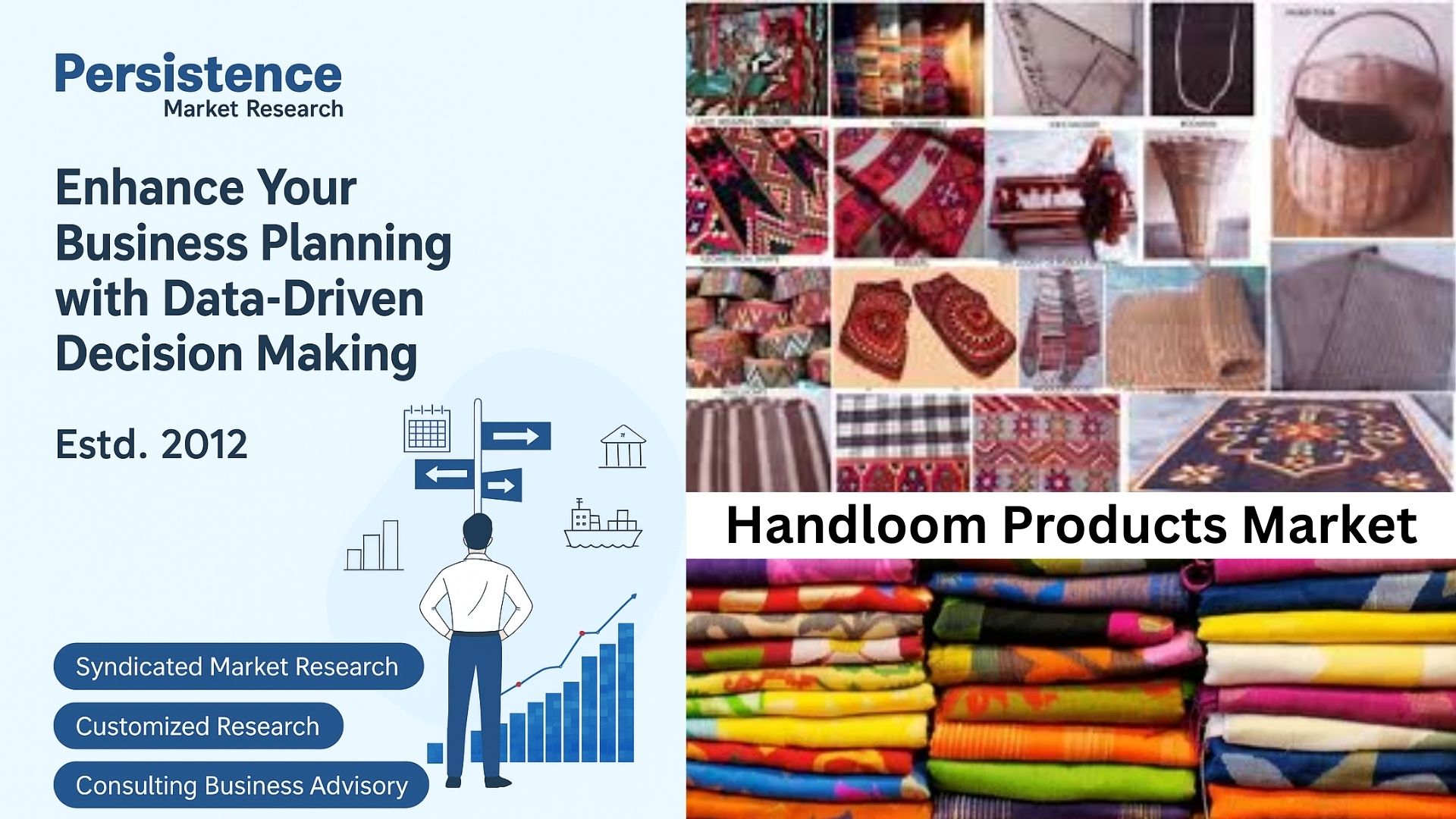
Handloom Products Market Outlook
Rising global demand for sustainable and handmade textile products
BRENTFORD, ENGLAND, UNITED KINGDOM, January 29, 2026 /EINPresswire.com/ -- The global handloom products market is poised for substantial expansion in the coming years. Expected to be valued at approximately US$ 9.7 billion in 2026, the market is projected to grow to US$ 18.1 billion by 2033, registering a strong compound annual growth rate (CAGR) of 9.3% during the forecast period from 2026 to 2033. Rising consumer preference for sustainable textiles, increasing appreciation for artisanal craftsmanship, and supportive government initiatives for traditional industries are collectively driving market growth worldwide.
➤ Download Your Free Sample & Explore Key Insights: https://www.persistencemarketresearch.com/samples/34070
Understanding Handloom Products
Handloom products are textiles woven manually using traditional looms without reliance on electricity or automated machinery. These products include a wide range of items such as sarees, scarves, shawls, home décor fabrics, upholstery materials, garments, and specialty fabrics. Known for their intricate designs, cultural authenticity, and sustainable production methods, handloom textiles have gained significant attention among environmentally conscious and ethically driven consumers.
Unlike mass-produced fabrics, handloom products offer uniqueness, craftsmanship, and cultural heritage value, making them highly attractive in both domestic and export markets.
Key Market Drivers
Rising Demand for Sustainable and Ethical Fashion
Growing awareness around environmental sustainability and ethical sourcing has significantly boosted demand for handloom textiles. Consumers increasingly prefer eco-friendly fabrics produced using minimal energy consumption and natural materials. Handloom products align well with sustainable fashion trends, as their production involves lower carbon emissions and supports local artisan communities.
Growing Appreciation for Artisanal Craftsmanship
There is a growing global appreciation for handcrafted and culturally authentic products. Handloom textiles often showcase traditional weaving techniques, unique regional patterns, and heritage craftsmanship, making them premium lifestyle and fashion choices in international markets.
Government Support and Promotion Programs
Several governments, particularly in developing countries, are actively supporting handloom industries through financial assistance, skill development programs, export promotion, and infrastructure development initiatives. Such programs aim to preserve traditional weaving communities while enhancing their market competitiveness.
Expanding E-commerce and Export Opportunities
Digital platforms and e-commerce marketplaces have enabled artisans and small manufacturers to reach global customers directly. Online sales channels are helping handloom producers tap into international markets, boosting export demand for handmade textiles and home furnishing products.
Rising Demand in Home Décor and Lifestyle Segments
Growing consumer interest in aesthetically appealing and culturally rich home décor products has expanded demand for handloom fabrics in upholstery, curtains, table linens, and decorative accessories. Hospitality and interior design sectors are increasingly incorporating handmade textiles for premium ambiance creation.
➤Customize This Report for Your Exact Requirements: https://www.persistencemarketresearch.com/request-customization/34070
Market Segmentation
By Product Type
• Apparel Fabrics: Includes sarees, dress materials, scarves, shawls, and traditional garments.
• Home Furnishing Textiles: Curtains, bed linen, cushion covers, and upholstery materials.
• Decorative and Lifestyle Products: Rugs, wall hangings, table covers, and specialty handcrafted fabrics.
By Material Type
• Cotton Handloom Products: Widely popular due to comfort and affordability.
• Silk Handloom Products: Known for premium appeal and ceremonial use.
• Wool and Blended Fabrics: Used in colder regions and specialty products.
By Distribution Channel
• Offline Retail Stores and Handicraft Exhibitions
• E-commerce Platforms and Online Marketplaces
• Direct Artisan Sales and Cooperative Outlets
By Region
• Asia-Pacific: Leads the market due to strong handloom traditions in countries such as India, Bangladesh, and Southeast Asian nations.
• North America: Growing demand for sustainable and artisan-made textiles fuels market expansion.
• Europe: Increasing preference for eco-friendly home décor and fashion products drives imports.
• Middle East & Africa: Emerging opportunities linked to tourism and cultural product demand.
• Latin America: Growing artisanal textile exports support regional growth.
Competitive Landscape
The handloom products market consists largely of artisan cooperatives, small-scale manufacturers, and export-oriented textile enterprises. Key participants include:
• Fabindia Overseas Pvt. Ltd.
• Vardhman Textiles Ltd.
• Himatsingka Seide Ltd.
• Arvind Limited
• Raymond Limited
• Nalli Silk Sarees Pvt. Ltd.
• Pochampally Handloom Park
• Co-optex (Tamil Nadu Handloom Weavers’ Cooperative Society)
• Boyanika Odisha State Handloom Cooperative
• Various regional handloom clusters and artisan cooperatives
Market competition is driven by design innovation, product authenticity, fair-trade certification, and export capabilities.
Challenges and Restraints
Despite promising growth prospects, the market faces several constraints:
• Limited Production Capacity: Manual weaving limits large-scale production, affecting supply consistency.
• Competition from Power Loom and Synthetic Fabrics: Machine-made fabrics are cheaper and widely available.
• Artisan Workforce Decline: Younger generations often shift away from traditional weaving due to income uncertainty.
• Price Sensitivity in Mass Markets: Handloom products tend to be more expensive, limiting mass-market adoption.
➤Secure Your Full Report - Proceed to Checkout: https://www.persistencemarketresearch.com/checkout/34070
Future Outlook
The global handloom products market is expected to witness sustained growth over the coming years due to several favorable trends:
• Growing global adoption of sustainable and ethical fashion
• Increased investments in artisan skill development and cluster modernization
• Digital marketing and online retail expansion
• Rising premium home décor demand
• Export promotion and global cultural exchange initiatives
Innovations in design, improved branding strategies, and collaborations between designers and artisan communities are expected to further boost market visibility and demand.
Conclusion
The handloom products market stands at the intersection of sustainability, cultural heritage, and evolving consumer preferences. With increasing global focus on environmentally responsible products and authentic craftsmanship, handloom textiles are gaining strong market momentum. While challenges related to scalability and workforce retention persist, continued government support, digital marketplace expansion, and rising ethical consumption trends are expected to drive robust market expansion. With the market projected to reach US$ 18.1 billion by 2033, the handloom sector presents promising opportunities for artisans, manufacturers, and investors alike.
More Trending Reports:
Functional Textiles Market - The global functional textiles market size is likely to value at US$3.5 Bn in 2025 and is expected to reach US$5.0 Bn by 2032, registering a CAGR of 5.2% during the forecast period from 2025 to 2032.
Women’s Apparel Market - The global women’s apparel market is estimated to reach a size of US$ 658.2 Bn by 2025. It is anticipated to showcase a CAGR of 3% during the forecast period.
Smita Kasar
Persistence Market Research
+1 6468786329
email us here
Visit us on social media:
LinkedIn
Instagram
Facebook
YouTube
X
Legal Disclaimer:
EIN Presswire provides this news content "as is" without warranty of any kind. We do not accept any responsibility or liability for the accuracy, content, images, videos, licenses, completeness, legality, or reliability of the information contained in this article. If you have any complaints or copyright issues related to this article, kindly contact the author above.
