

Aseptic Packaging Market to Reach US$136.5 Billion by 2033 from US$75.2 Billion in 2026 at 8.9% CAGR
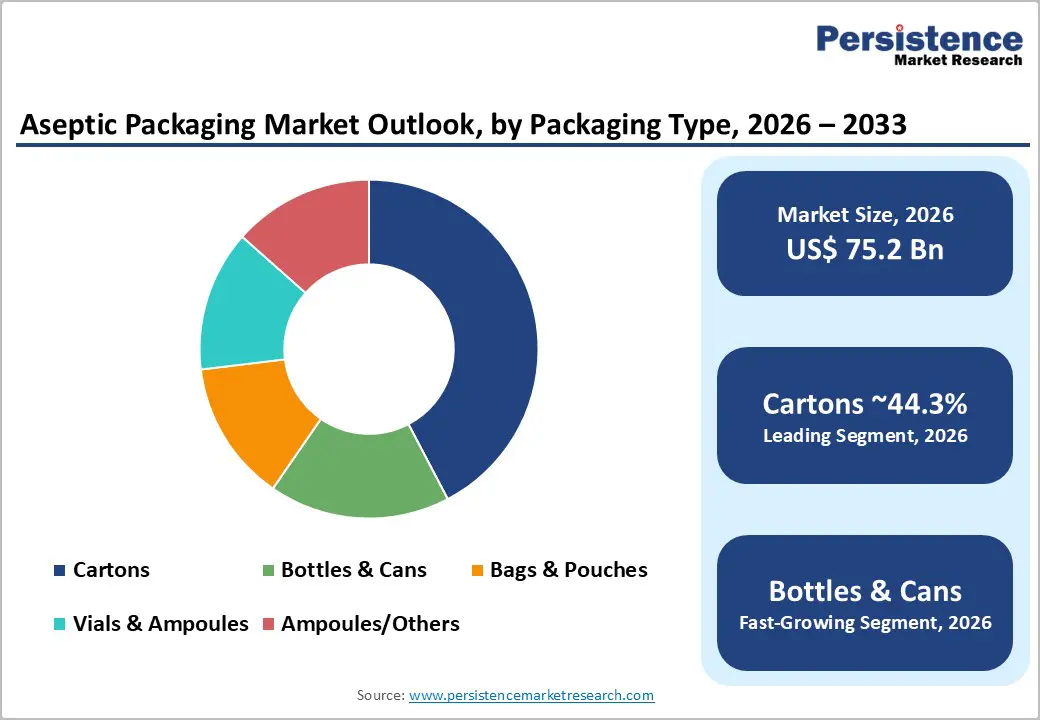
Aseptic Packaging Market
Europe leads the aseptic packaging market with a 32.8% share, driven by strong dairy demand, beverage consumption, and early adoption of recyclable cartons
LONDON, LONDON, UNITED KINGDOM, January 27, 2026 /EINPresswire.com/ -- The aseptic packaging market has become a cornerstone of modern food, beverage, and pharmaceutical supply chains, enabling safe, long shelf life storage without the need for refrigeration or preservatives. Aseptic packaging involves filling sterilized products into sterilized containers under controlled conditions, ensuring product safety, quality retention, and extended usability. This packaging format has gained widespread adoption as manufacturers and consumers prioritize convenience, hygiene, and cost efficiency.
According to the latest study by Persistence Market Research, the global aseptic packaging market size is likely to be valued at US$75.2 billion in 2026 and is expected to reach US$136.5 billion by 2033, growing at a CAGR of 8.9% between 2026 and 2033. This growth is driven by rising consumption of shelf stable beverages and liquid foods, increasing pharmaceutical demand for sterile primary packaging, and sustained investments in recyclable cartons and mono material packaging solutions.
Explore Full Report Quality – Free Sample Inside:https://www.persistencemarketresearch.com/samples/36022
Rising Demand for Shelf Stable Beverages and Liquid Foods
One of the most significant drivers of the aseptic packaging market is the growing consumption of shelf stable beverages and liquid food products. Urban lifestyles, longer working hours, and the demand for convenience have fueled sales of ready to drink juices, dairy alternatives, soups, sauces, and nutritional beverages. Aseptic packaging allows these products to be stored for extended periods without compromising taste or nutritional value, making them ideal for both retail and institutional distribution. Additionally, the ability to transport shelf stable products without cold chain infrastructure reduces logistics costs and minimizes spoilage, making aseptic packaging particularly attractive in emerging markets and remote regions.
Pharmaceutical Industry Adoption and Sterile Packaging Needs
The pharmaceutical sector is increasingly adopting aseptic packaging for injectable drugs, vaccines, and sensitive liquid formulations. Sterile primary packaging is essential to ensure patient safety and regulatory compliance, and aseptic systems provide the necessary contamination control.
Growth in biologics, injectable therapies, and large scale immunization programs has intensified demand for aseptic vials, ampoules, and bottles. Pharmaceutical manufacturers value aseptic packaging for its reliability, consistency, and ability to meet stringent global quality standards, further strengthening the market outlook.
Sustainability and Innovation in Packaging Materials
Sustainability has emerged as a defining trend in the aseptic packaging market. Manufacturers are investing heavily in recyclable cartons, lightweight materials, and mono material structures to address environmental concerns and comply with tightening food contact regulations. Paper based aseptic cartons with renewable content are gaining popularity, especially in beverage and dairy applications.
Innovation is also focused on reducing material usage, improving barrier properties, and enhancing recycling compatibility. These advancements help brand owners meet sustainability targets while maintaining the functional benefits of aseptic packaging.
Make This Report Fit Your Needs – Customize Now :https://www.persistencemarketresearch.com/request-customization/36022
Market Segmentation Overview
The aseptic packaging market is segmented across multiple dimensions to address diverse end use requirements and regional preferences.
Market Segmentation
By Material
Paper & Paperboard
Plastic
Metal
Glass & Wood
By Packaging Type
Cartons
Bottles & Cans
Bags & Pouches
Vials & Ampoules
Ampoules Others
By Application
Beverages
Food
Pharmaceutical
Dairy Food
Others
By Region
North America
Europe
East Asia
South Asia & Oceania
Latin America
Middle East & Africa
This segmentation highlights the versatility of aseptic packaging and its ability to serve a wide range of industries and geographic markets.
Regional Growth Trends and Market Expansion
Regional dynamics play a crucial role in shaping the aseptic packaging market. North America and Europe represent mature markets with strong regulatory frameworks, advanced filling technologies, and high consumption of packaged foods and beverages. These regions are also leaders in sustainable packaging innovation.
East Asia and South Asia and Oceania are experiencing rapid growth due to rising population, urbanization, and expanding middle class consumption. Increasing investments in food processing infrastructure and pharmaceutical manufacturing are further accelerating adoption. Latin America and the Middle East and Africa are gradually embracing aseptic packaging to overcome cold chain limitations and improve food security.
Checkout Now & Download Complete Market Report :https://www.persistencemarketresearch.com/checkout/36022
Cost Pressures and Adoption Challenges
Despite strong growth prospects, the aseptic packaging market faces certain challenges. Structural cost pressures in cold chain logistics make aseptic solutions attractive, yet the capital intensity of aseptic filling lines can limit adoption for small and medium sized manufacturers. High initial investment, technical complexity, and maintenance requirements influence adoption timelines.
Tightening food contact regulations also require continuous upgrades in materials and processes, increasing compliance costs. However, long term savings from reduced spoilage, extended shelf life, and lower distribution costs often offset these challenges.
Company Insights
Key companies operating in the market include
✦ Tetra Pak
✦ SIG Combibloc
✦ Elopak
✦ Amcor
✦ Greatview Aseptic Packaging
✦ Scholle IPN
✦ Uflex
✦ Schott
✦ IMA Group
✦ Ecolean
✦ Mondi Group
✦ Stora Enso
✦ DS Smith
✦ Nippon Paper Industries
✦ Goglio
✦ Wipak Group
✦ Printpack
✦ Sealed Air.
These companies compete on innovation, material science, filling system integration, and global distribution capabilities to strengthen their market positions.
Future Outlook of the Aseptic Packaging Market
The future of the aseptic packaging market remains highly promising, supported by evolving consumer preferences, pharmaceutical expansion, and sustainability driven innovation. As food and beverage brands continue to seek cost effective, safe, and environmentally responsible packaging solutions, aseptic formats are expected to gain further traction.
Advancements in recyclable materials, digital printing, and smart packaging technologies will enhance functionality and brand differentiation. With strong growth projected through 2033, the aseptic packaging market is well positioned to remain a critical enabler of global food security and healthcare delivery.
Explore the Latest Trading Reports :
Food Storage Container Market : The global food storage container market size is likely to be valued at US$148.9 billion in 2026 and is expected to reach US$199.9 billion by 2033, growing at a CAGR of 4.3% between 2026 and 2033
Cellulose Film Packaging Market : The global cellulose film packaging market is likely to be valued at US$ 744.7 million in 2026 and is expected to reach US$ 1,149.7 million by 2033, growing at a CAGR of 6.4% between 2026 and 2033
Persistence Market Research
Persistence Market Research Pvt Ltd
+ +1 646-878-6329
email us here
Visit us on social media:
LinkedIn
Instagram
YouTube
X
Legal Disclaimer:
EIN Presswire provides this news content "as is" without warranty of any kind. We do not accept any responsibility or liability for the accuracy, content, images, videos, licenses, completeness, legality, or reliability of the information contained in this article. If you have any complaints or copyright issues related to this article, kindly contact the author above.
