

Overcoming Curved Surface Challenges: Innovations in 3D Sublimation Film from Advansub
PROSUB I ONE-STOP DYE SUBLIMATION BLANKS FACTORY
SUBLIMATION FILM WHOLESALER
DONGGUAN, GUANGDONG PROVINCE, CHINA, January 13, 2026 /EINPresswire.com/ -- As demand for personalized products continues to expand across consumer electronics, lifestyle accessories, and wearable devices, manufacturers are increasingly challenged by the need to achieve consistent, high-quality image transfer on curved and three-dimensional(3D) surfaces. Recent developments in three-dimensional(3D) sublimation film technology—commonly referred to in the industry as “sublimation film”—are contributing to more reliable solutions for these complex applications.
Conventional dye-sublimation processes are well established for flat polyester fabrics and coated substrates. However, when applied to products such as phone cases, earphone cases, keycaps, and knee pads, traditional paper-based transfer media often struggle to accommodate curved geometries. Common issues include image distortion, incomplete edge coverage, uneven color density, and ghosting effects, limiting production consistency in three-dimensional(3D) applications.
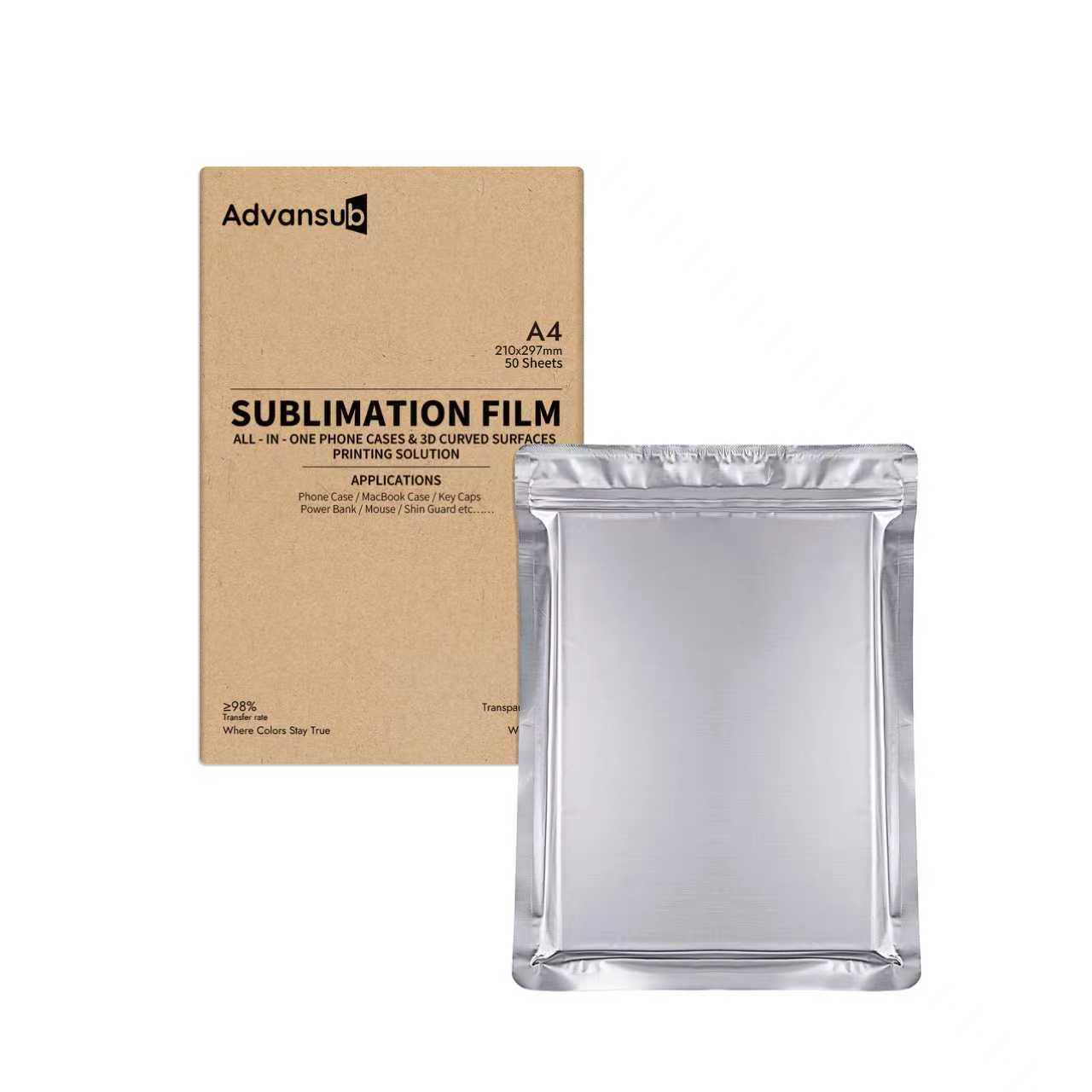
Sublimation film serves as a critical carrier in the dye sublimation process, where specialized inks are printed onto the film and then transformed into gas under heat and pressure. This allows the dye to penetrate molecularly into materials like polymer-coated items and even curved objects such as phone cases and keycaps. The result is permanent, full-color graphics that resist fading, cracking, peeling, or washing—qualities increasingly valued in sportswear, personalized gifts, signage, and home décor.
Within the three-dimensional sublimation workflow, sublimation film serves as a critical interface between flat image printing and molded or contoured end products. Typically manufactured using a PET (polyethylene terephthalate) base combined with functional coating layers, the film is engineered to maintain flexibility, dimensional stability, and controlled thermal behavior under heat and vacuum conditions.
From a material standpoint, 3D sublimation films are generally produced at a thickness of approximately 210–220 microns. When heated, the film can achieve elongation rates of roughly 200% to 300% while maintaining structural integrity. This level of elasticity allows the film to conform closely to complex surface profiles—including edges, curves, and recessed areas—without tearing, wrinkling, or leaving unprinted gaps, challenges commonly associated with rigid or paper-based media.
Equally important is the role of the film’s functional coating. The coating is designed to securely anchor sublimation ink droplets during printing, minimizing ink bleeding or image instability prior to transfer. During the heating phase, the same coating must release the ink in a controlled and uniform manner, enabling the dye to sublimate efficiently and penetrate the polymer coating of the target substrate. Industry assessments indicate that high-performance coatings can facilitate ink transfer rates exceeding 95%, contributing to improved color saturation and image clarity on curved surfaces.
In vacuum sublimation systems, sublimation film also functions as a pressure-distribution medium. Compared with paper-based alternatives, its superior air-tightness allows residual air between the film and the substrate to be more effectively evacuated under negative pressure. This results in more uniform surface contact and helps reduce defects such as ghosting or blurred edges caused by uneven pressure during transfer.
Advansub, a sublimation consumables brand developed by Dongguan Prosub Technology Co., Ltd., has recently focused on optimizing these performance characteristics for practical manufacturing environments. According to the company, improvements have been made to balance the film’s thermal shrinkage behavior, addressing one of the most persistent challenges in three-dimensional(3D) sublimation—edge distortion and image misalignment during mass production. These refinements are intended to improve yield stability without increasing process complexity.
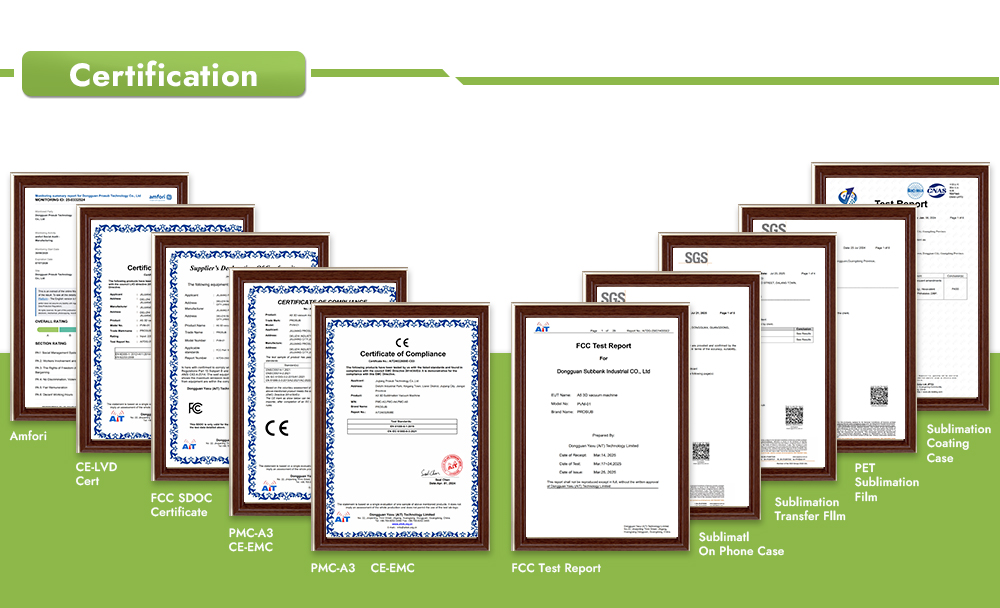
Material selection has also been aligned with prevailing environmental compliance standards. The PET substrates used in Advansub’s sublimation films are designed to avoid the release of harmful gases during the transfer process, supporting regulatory requirements in international export markets. In parallel, the company has expanded technical support beyond material supply, offering reference ICC color profiles and vacuum press parameter guidelines to help users reduce variability caused by color management and equipment setup.
From a broader industry perspective, sublimation film is increasingly viewed not merely as an auxiliary consumable, but as a decisive factor influencing final product quality in three-dimensional(3D) sublimation transfer. As customized products continue to adopt more complex forms, ongoing improvements in film elasticity, coating performance, and process compatibility are expected to play a key role in extending the practical limits of dye-sublimation technology.
Why Choose Prosub(Advansub)?
Premium Raw Materials
Advansub uses high-grade PET base film sourced from Toray Japan — one of the world’s leading suppliers of polyester substrates — combined with top-tier international coating formulations. This foundation delivers stable, superior ink absorption, release, and transfer characteristics, forming the basis for consistently excellent print quality.
Stringent Daily Quality Control
Every production batch is subject to rigorous monitoring of raw material storage conditions (temperature and humidity). Both pre- and post-production, each roll undergoes strict testing for adhesion strength and coating thickness to eliminate any deviation and guarantee batch-to-batch consistency.
Common Industry Challenges & Advansub Solutions
Manufacturers frequently encounter the following typical issues when working with 3D sublimation films. These problems often stem from material characteristics, environmental conditions, or operational factors:
1.Incomplete Transfer, White Spots, or Bumpy Areas Common cause:
Ink not fully dried before sublimation, preventing uniform vaporization.
Advansub recommendation: After printing, dry the film in a 55°C oven for 20 minutes. For very dark patterns, lightly blow with a hair dryer for ~10 seconds before transfer to ensure optimal quality and efficiency.
2.Film Curling, Wrinkling, or Uneven Patterns Common cause:
Workshop humidity exceeds 60%, causing the film to absorb moisture.
Advansub recommendation: Maintain workshop humidity below 60% with an enclosed environment (especially during rainy seasons). Seal the bag immediately after each use. Any film exposed to air for more than one week in high humidity should be replaced to prevent material failure.
3.Edge Lifting, Ghosting, or Pattern Distortion Common cause:
Incomplete conformity during vacuum process or residual moisture on the substrate.
Advansub recommendation: Use a professional 3D vacuum heat press with optimized vacuum and temperature settings. Full technical support is provided, including machine parameter tuning, color management, and troubleshooting of over-stretching issues.
4.Dull Colors or Low Transfer Rate Common cause:
Ink-coating mismatch or environmental interference.
Advansub recommendation: Pair with genuine sublimation inks and Advansub’s high-quality PET base + precision coating for guaranteed 95%+ transfer efficiency. Comprehensive technical assistance is available to resolve issues quickly.
Tiffany Kong
Dongguan Prosub Technology Co., Ltd.
+86 136 0028 0020
email us here
Visit us on social media:
LinkedIn
Facebook
YouTube
TikTok
Legal Disclaimer:
EIN Presswire provides this news content "as is" without warranty of any kind. We do not accept any responsibility or liability for the accuracy, content, images, videos, licenses, completeness, legality, or reliability of the information contained in this article. If you have any complaints or copyright issues related to this article, kindly contact the author above.
