

U.S. Department of Education Guidance Encourages Inclusive Practices Aligned with IDEA and ESEA
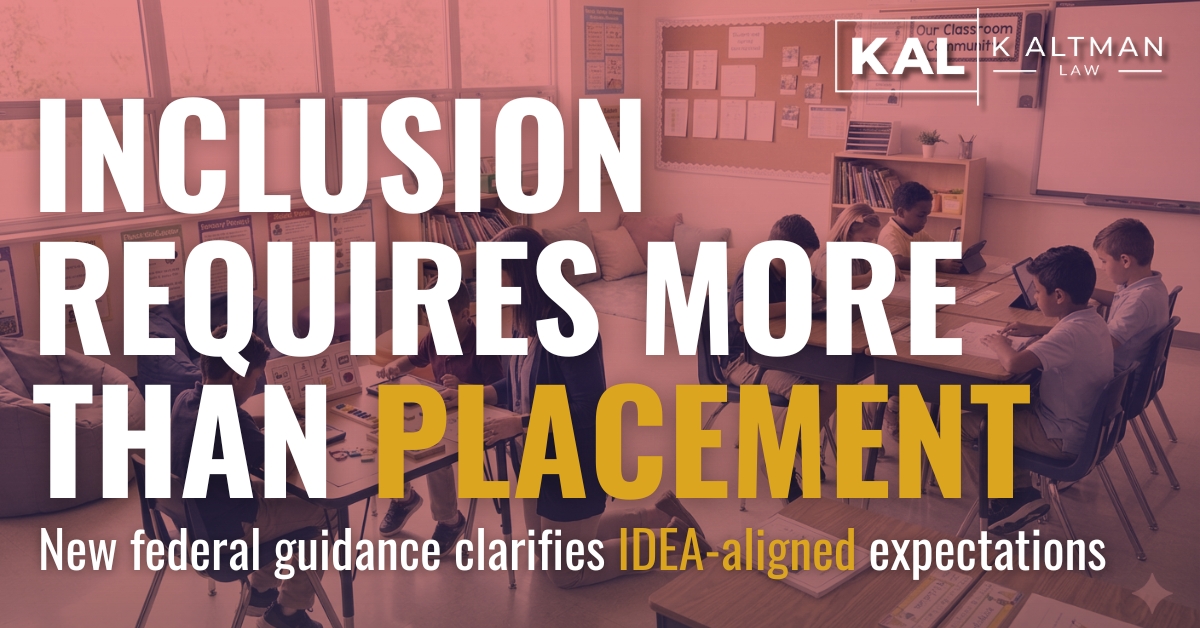
Federal guidance emphasizes that inclusive education under IDEA must be individualized, documented, and supported by measurable goals.

Keith Altman
New Education Department guidance reinforces that inclusive education must remain individualized, data-driven, and aligned with IDEA.
What the Department emphasized:
In a January 2025 Dear Colleague Letter, the U.S. Department of Education reaffirmed that IDEA and the Elementary and Secondary Education Act can be implemented in ways that support inclusive educational practices and high expectations for students with disabilities.
The guidance underscores the value of belonging and access to rigorous instruction, while reiterating that placement and supports must remain individualized.
What “inclusive” should mean in practice:
For districts, inclusion is not a slogan; it is a set of decisions that should be traceable to data, individualized needs, and measurable goals. Teams should be able to explain how supports are designed to help the student access the general curriculum and participate meaningfully.
For families, the key question is whether the IEP (or 504 plan, where applicable) reflects the student’s real needs and whether services and supports are being implemented with fidelity.
Operational takeaways for IEP teams:
Document the rationale for placement decisions, including the supports and services that make participation in general education feasible.
Confirm progress monitoring: how will the team know the student is accessing instruction and making appropriate progress?
Align behavior supports with evidence-based interventions and ensure the plan is implemented consistently across staff and settings.
“Inclusion is best understood as a disciplined implementation problem: clear goals, appropriate supports, and faithful execution. When teams document the “why” behind placement and services, they reduce conflict and improve outcomes.” — Keith Altman, Founder/Managing Partner
What families and students should do now:
• Request a written explanation of how the proposed placement aligns with the student’s individualized needs.
• Ask how progress will be measured and how often data will be reviewed by the team.
• If behavior is a barrier, ask what evidence-based supports are being implemented and by whom.
• Keep communications in writing and maintain a clean record of meetings, notices, and service logs.
Next step:
If you are preparing for an IEP meeting or revisiting placement decisions, focus on individualized data and written implementation details—not general assurances.
About K Altman Law:
K Altman Law is a national education law firm serving students, families, and educators in matters involving student discipline, special education (IEP/504), Title IX, and related civil rights issues. We help clients understand processes, preserve rights, and make informed decisions at critical moments.
Disclaimer:
This release is for general informational purposes only and is not legal advice. Outcomes depend on the specific facts and applicable law, which vary by jurisdiction. If you need advice about a specific matter, consult a qualified professional in your jurisdiction.
Keith Altman
K Altman Law
+1 888-984-1341
kalonline@kaltmanlaw.com
Visit us on social media:
LinkedIn
Instagram
Facebook
YouTube
TikTok
X
Legal Disclaimer:
EIN Presswire provides this news content "as is" without warranty of any kind. We do not accept any responsibility or liability for the accuracy, content, images, videos, licenses, completeness, legality, or reliability of the information contained in this article. If you have any complaints or copyright issues related to this article, kindly contact the author above.
